
On February 28th 2026, the US and Israel initiated the “Epic Fury” surprise strike against Iran, heavily targeting the Iranian Navy and the IRGC Navy. Following days of high-intensity air and naval strikes, Iran’s naval forces, including its main surface combatants, were “completely destroyed”, as stated by President Trump merely a week into the war.[1] Yet simultaneously, Iran effectively seized control of the Strait of Hormuz by blocking or harassing commercial shipping traffic, triggering turmoil across global energy and capital markets. In response, the US found itself temporarily at a loss, left with few options other than calling upon other countries to provide naval escorts in the strait and gearing up for the amphibious landing operations. On April 13, the US Military started blockade on Iranian ports to force Iran to compromise.
The History
As the UK withdrew its Navy from the Persian Gulf by the end of 1971, the Iranian Navy had gradually gained almost total control over the gulf’s waters by 1977. Following its intervention in the Iran-Iraq “Tanker War” and a series of subsequent conflicts, the US established maritime hegemon in the Gulf and rebuilt its Fifth Fleet in July 1995. The Fleet, stationed in Bahrain, was mainly in charge of safeguarding the maritime order of the Gulf and protecting the world’s largest single source of oil and natural gas production. Its primary focus of vigilance is the maritime force of its old rival, Iran, located just across the waters. In January 2002, when Iran was labeled part of the “Axis of Evil”, the naval forces of the US and Iran fell into prolonged confrontations. Given the vast disparity in military strength between the two nations, it is universally acknowledged that the blockade of the Strait of Hormuz is Iran’s trump card against the US. The US is acutely aware of this and dares not lower its guard.
Over the years, the US military and strategic community have focused on how Iran leverages the Strait of Hormuz to deny US sea control in the Gulf, viewing its strategic utilisation of the Strait and the establishment of effective asymmetrical advantages as an Iran version of Anti-Access/Area Denial (A2/AD) strategy.
However, being significantly weaker than the US, Iran finds it difficult to completely deny US naval and air forces access to the Persian Gulf. Therefore, it has shifted its focus toward an area denial strategy to prevent the US from conducting freedom of actions in the Gulf. Back in the “Tanker War” of 1988, Iran suffered a devastating blow when its surface combatants were easily destroyed, from which the Iranian strategists drew lessons and began to emphasize the establishment of asymmetrical combatant forces in the Gulf. For instance, while the Iranian Navy tends to develop traditional maritime forces such as surface vessels and submarines, the IRGC Navy, which is more highly favored, leans toward developing more asymmetrical forces, including small fast attack craft (FAC) and midget submarines. Such an Area Denial strategy with Iranian characteristics goes beyond merely fortifying the Strait of Hormuz; it capitalizes on the topographical advantages of the narrow confines of the Persian Gulf to build a comprehensive asymmetrical defense system aimed at denying US sea control. This constitutes a classic narrow-sea denial strategy that fully exploits geographical advantages. View from this perspective, Iran’s Persian Gulf denial system comprises the following components:
Transforming the Strait of Hormuz into an impenetrable fortress. Iran swiftly occupied the islands of Greater Tunb, Lesser Tunb, and Abu Musa following the withdrawal of the British Navy. At that time, the newly formed United Arab Emirates (UAE) was left helpless and could only stage protests and maintain its sovereignty claims unilaterally. Meanwhile, Iran began to style itself as the “Gatekeeper of the Persian Gulf” after gaining full control of the Gulf, building up a multi-dimensional military system underpinned by island chains ranging from Abu Musa Island to Bandar Abbas. In the realm of maritime strategy, narrow water chokepoints boast the most favorable conditions for the denial of enemy’s maritime forces, and are especially effective in constraining the freedom of military actions of maritime powers. Since the deterioration of the US-Iran relationship, Iran has stepped up efforts to strengthen the firepower of its anti-ship missiles and various types of artillery deployed across multiple islands. This has established a credible and effective multi-dimensional denial system through the coordinated deployment of surface combatants, aircraft, attack unmanned vehicles (UAV), submarines and mines. From the end of 2011 to July 2012, in response to sanctions imposed by the US and the EU over the Iranian Nuclear Issue, Iran once threatened to block the Strait of Hormuz so as to cut off the oil traffic lane. Since then, blocking the Strait of Hormuz has been broadly regarded as the last resort for Iran to seek a strategic advantage. More than a decade later, General John Daniel Caine, Chairman of the Joint Chiefs of Staff, acknowledged that this remains a “tactically complex environment”.[2] Therefore, the US evacuated all of its vessels from the Persian Gulf before the initiation of “Epic Fury”, bracing for the inevitable counterstrike from Iran.
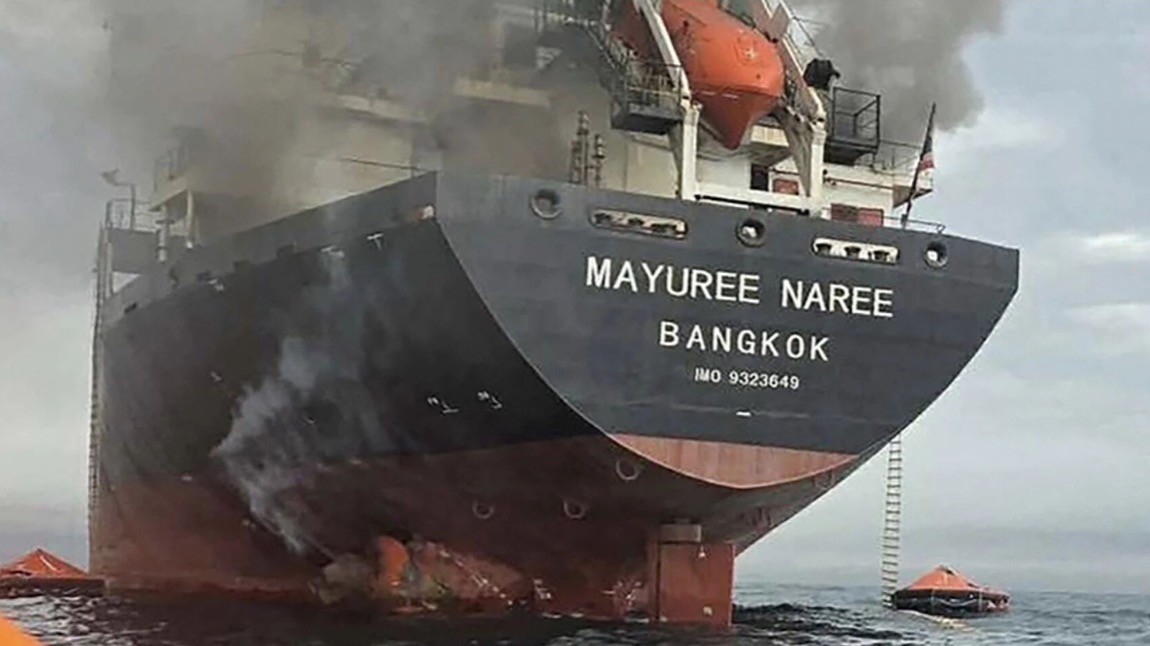
What often goes unnoticed is that Iran has established an asymmetrical combat system to constrain US military operations by utilizing geographical advantages of the narrow confines of the Persian Gulf. Stretching 990 kilometers in length and measuring a mere 338 kilometers at its widest point, the Persian Gulf provides Iran with an uninterrupted geographic expanse along its eastern flank. During wartime, Iran’s maritime forces, with their asymmetrical advantages, can play an essential role in waging guerrilla warfare across the Gulf, with effective shore-based fire coverage. At least since being labeled part of the “Axis of Evil”, Iran has deployed a vast array of anti-ship missiles, air defense missiles, medium and short-range surface-to-surface missiles, attack UAVs, ground combat forces and militias over the hundreds of kilometers of the eastern shore of the Persian Gulf stretching from south to north, as well as into its strategic depth. This builds up a credible asymmetrical combat system, oriented toward the Persian Gulf, to offset US maritime superiority.
The Reality
Modern maritime powers are facing increasing technological, political, and legal constraints on sea control. In particular, the widespread proliferation of Anti-Access/Area Denial (A2/AD) equipment and technologies has made sea denial significantly easier to achieve than relative control. We are currently living in an era dominated by sea denial.[3] At its narrowest point, the Strait of Hormuz is less than 20 nautical miles wide, with a navigable channel of only about 3 kilometers. When facing attacks from coastal drones, missiles, and high-speed boats, modern large naval vessels designed for over-the-horizon (OTH) operations will find their early warning and reaction times extremely limited, placing them in grave peril. Consequently, the formidable maritime power of the U.S. Navy is rendered powerless in operations such as convoy escorts and forcefully opening the strait.
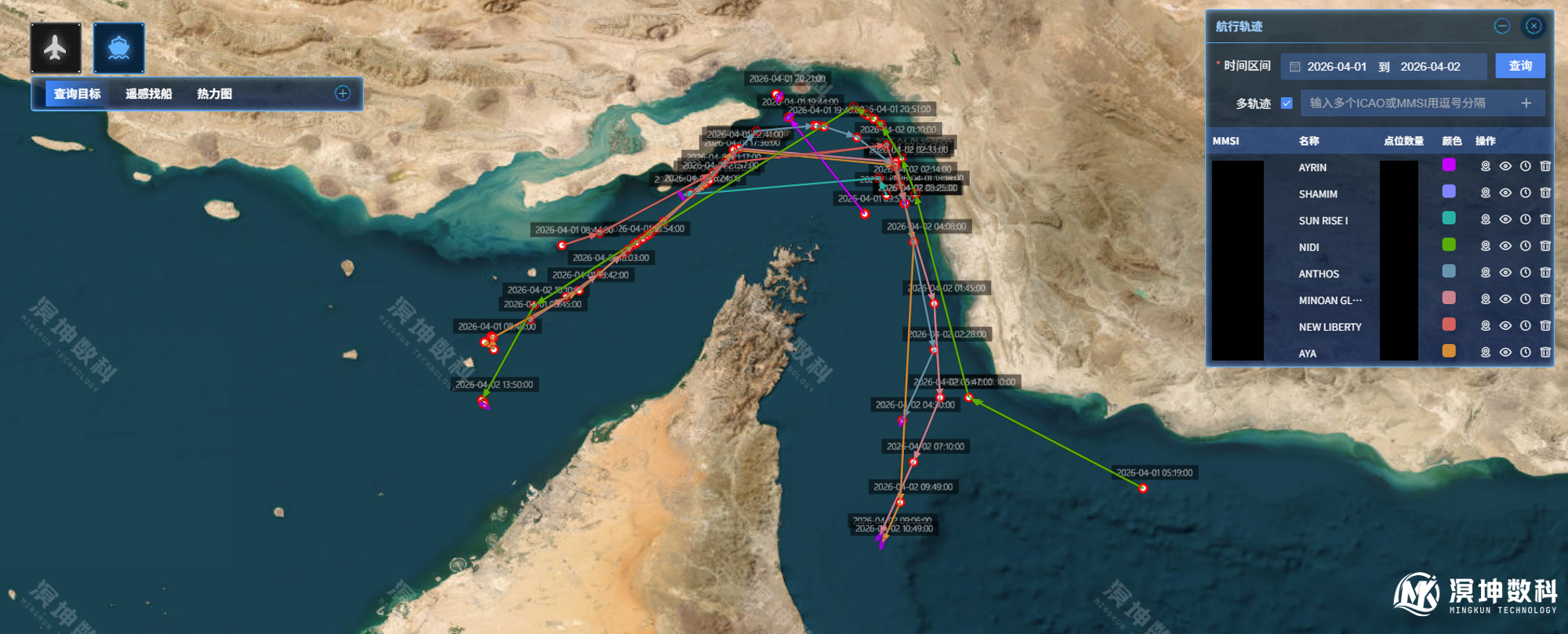
On the first day of the war, Iran announced a conditional blockade of the Strait of Hormuz. This was not only an effort to deny U.S. sea control, but also to block most commercial vessels from transiting the strait, which choked off the global maritime lifeline for energy, petrochemicals, and related bulk commodities for over a month. Unlike other maritime areas, the Strait of Hormuz controls approximately 20% of global oil consumption and liquefied natural gas (LNG) trade. Through this move, Iran also sought to exert pressure on the United States by leveraging global political and economic issues.
Furthermore, numerous military, political, and economic assets of the U.S. and its Gulf allies suffered heavy losses due to Iran's sustained strikes and blockade of the strait. In particular, 17 U.S. regional bases endured multiple rounds of counter-attacks, resulting in severe damage to equipment and infrastructure. The problem of rapid munitions depletion and the resulting resupply bottlenecks has become increasingly acute. If the U.S. fails to effectively counter Iran's asymmetric regional denial and secure a victory, the Gulf states and the world at large will lose faith in U.S. security commitments, and Washington will pay a heavy price strategically, diplomatically, and militarily.
Confronted with a narrowing set of alternatives, the U.S. military is pursuing a two-pronged preparation: (1) Deploying amphibious assets to capture strategic islands in the strait to neutralize Iran's denial capabilities, with Greater Tunb, Lesser Tunb, and Abu Musa cited as primary targets. (2) Seizing Kharg Island, a critical strategic asset, to exert maximum leverage and compel Iran into concessions.
However, whether seizing inner-line chokepoints or capturing Iran's oil and gas hubs, the U.S. military faces the problems of manpower shortages and excessively high risks. Although Trump has repeatedly claimed that the Iranian Navy has been completely destroyed, in reality, Iran's hundreds of light and small boats in the Persian Gulf, particularly around the Strait of Hormuz, have suffered minimal losses and can still conduct large-scale minelaying.[4] Currently, the 26th Marine Expeditionary Unit (26th MEU) and the 31st MEU have assembled in the Gulf of Oman, with the 11th MEU scheduled to arrive in early May. Supported by naval and air forces, it will be extremely difficult for these three light battalion-level combat teams—totaling 6,000 to 7,000 personnel (with perhaps only about 3,000 frontline combat-ready troops)—to execute Expeditionary Advanced Base Operations (EABO) and capture several heavily defended strait islands backed by coastal defense firepower. This is not to mention the possibility of having to divide forces to raid other targets and defend more critical assets. Backed by air supremacy, there is a possibility of success for the U.S. military to capture Kharg Island using amphibious forces, airborne troops, and other special operations forces, but the problem is how to hold it long-term. The island is just over 20 kilometers from the Iranian mainland, completely within the striking radius of various Iranian forces. Capturing the island would very likely trigger a large-scale ground war, which is exactly the option the U.S. military is currently trying its utmost to avoid.
Looking Ahead
Predictably, unless Iran experiences internal turmoil and voluntarily compromises, it will be difficult for the United States to dismantle Iran's asymmetric regional denial strategy, relying on the geographic advantage of narrow waters, through military strikes and political deception. In this context, whether, when, and how the U.S. can open the Strait of Hormuz is not only the key to determining the outcome of the conflict, but also a sensitive and drastic factor influencing global economic and political trends, ultimately bearing on U.S. regional maritime superiority and even hegemonic stability. The situation the U.S. military faces in the Strait of Hormuz presents a classic modern sea power dilemma: on the one hand, the U.S. unequivocally holds absolute overall maritime superiority over Iran; on the other hand, against the backdrop of the new revolution in military technology and under specific geographic conditions, this maritime superiority is exceedingly difficult to translate into concrete, effective sea control.
As mentioned earlier, the operational options for the U.S. military to break the blockade of the Strait of Hormuz are quite limited. Hasty operational planning, an irrational force structure, and insufficient weapon platforms severely impacted the U.S. military's combat effectiveness in 'Epic Fury.' The Strait of Hormuz issue highlights America's strategic and tactical dilemmas. If negotiations in Pakistan yield no results, the U.S. will still prioritize 'opening' the Strait of Hormuz as the focus of its military operations, supplemented by diverse attacks on vital ports, islands, and towns along the northern edge of the Gulf of Oman, the hinterland of the Persian Gulf, and Iran's northwestern border. Once the U.S. secures any gains, it will use them as bargaining chips, linking them to political issues, to force Iran to cease hostilities and even relinquish control over the strait. If Iran refuses to compromise and insists on counterattacking at all costs, the struggle over sea denial in the strait will evolve into a long-term war of attrition.
All conflicts and wars ultimately draw to a close. Yet, given the current strategic landscape, no matter how the U.S.-Israel-Iran war terminates, the order within the Strait of Hormuz will impossibly revert to the status quo ante bellum. The U. S. maritime superiority and sea control have been successfully contested by Iran's geographic-dependent sea denial strategy. This once again exposes the limitations of power projection and employment for 21st-century maritime powers, even though the U.S. Navy and Marine Corps have been extensively preparing for littoral combat and countering A2/AD (Anti-Access/Area Denial) operations for years. How to deal with the dominance Iran has established during wartime over the Strait of Hormuz and its rules of transit, as well as its capacity to shape the Gulf order, will inevitably become an issue that the international community has to face.
Reference
[1]Khaled Badr,”rump says US has sunk all Iranian ships, destroyed most missile launch platforms,” https://www.aa.com.tr/en/americas/trump-says-us-has-sunk-all-iranian-shi....
[2]Nick Childs,“Choppy waters in the Strait of Hormuz,” https://www.iiss.org/online-analysis/online-analysis/2026/03/choppy-wate....
[3]胡波:《从霸权更替到“多极制衡”:16世纪以来的海上格局演变》,载《中国社会科学》,2023年第2期,第92—96页。
[4]Tuneer Mukherjee,“Dominance without Control: Naval Dynamics in Operation Epic Fury,” https://www.orfonline.org/expert-speak/dominance-without-control-naval-d....
Chen Yong

Chen Yong, assistant research fellow at the Institute of International Relations, Shanghai Academy of Social Sciences (SASS), research fellow of SCSPI. He received Ph.D. degree from Peking University. His Research interests focus on United States Navy, China-US Maritime Security and International Security. He has published a number of papers and reviews in World Economics and Politics, The Journal of International Studies, The Journal of International Studies,Zaobao and etc.